Provider Enrollment and Credentialing Services | Complete Guide for Healthcare Providers
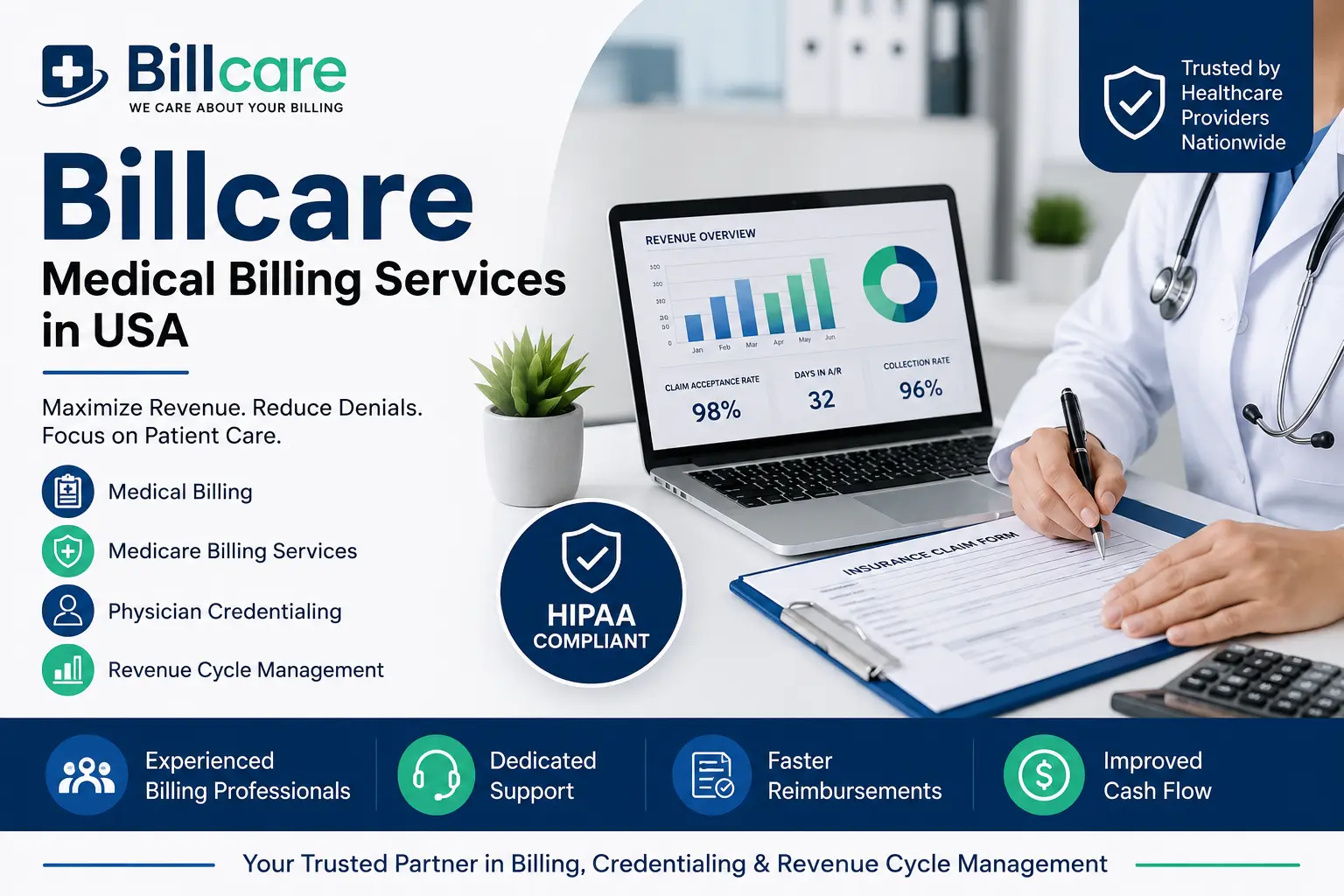
Billcare is a modern healthcare support system designed to help hospitals, clinics, and independent providers manage their financial and administrative processes more efficiently. The healthcare industry involves a lot of paperwork, insurance coordination, and compliance tasks that can slow down operations if not handled properly.
One of the most important services in this system is provider enrollment and credentialing, which ensures that healthcare providers are properly verified and approved by insurance companies before they can start receiving payments.
Billcare simplifies this entire process so providers can focus more on patient care and less on administrative stress.
What is Provider Enrollment and Credentialing?
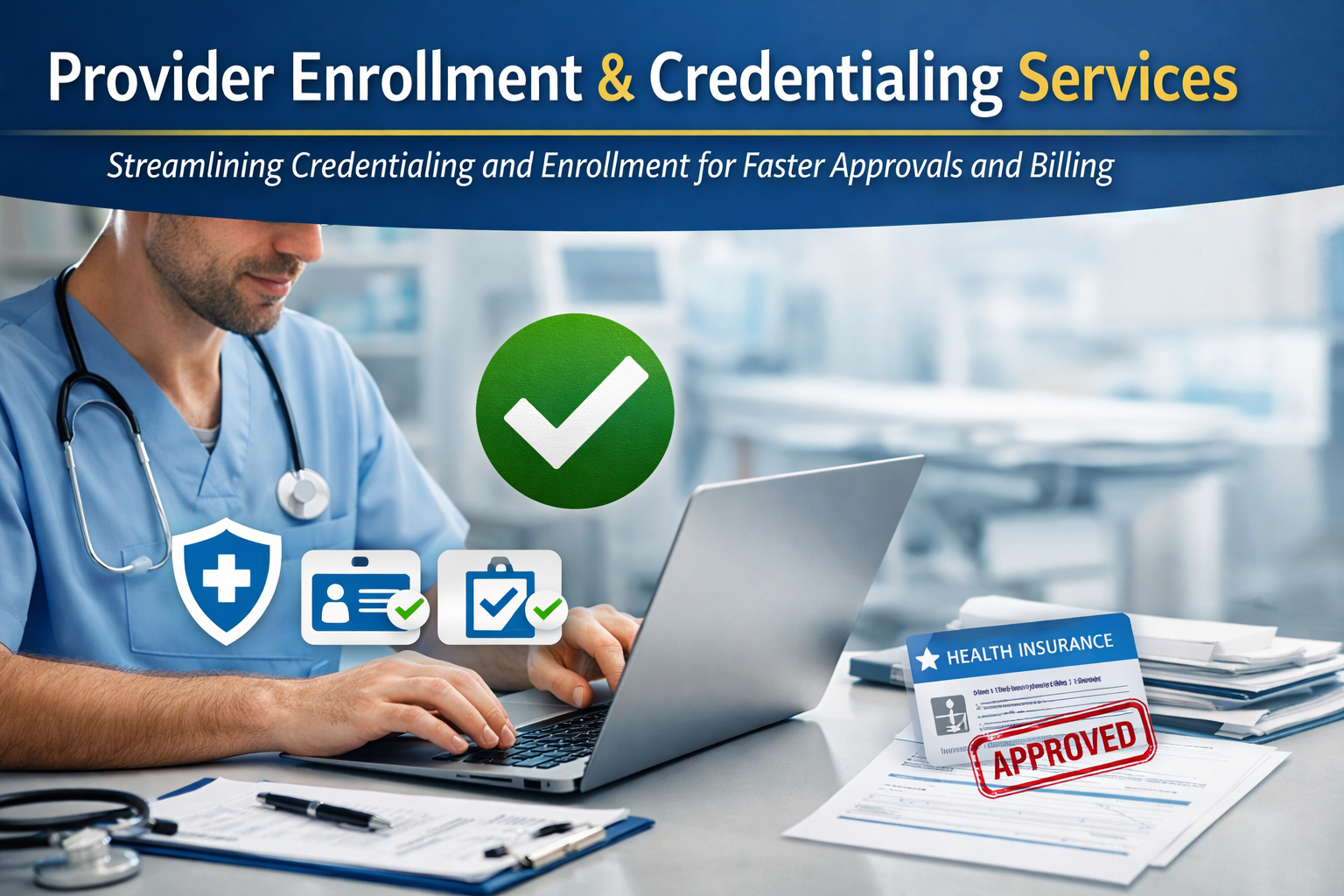
Provider enrollment and credentialing is the process of registering healthcare providers with insurance companies and verifying their qualifications, licenses, and professional background.
Insurance companies require this process to confirm that a provider is qualified, trustworthy, and legally allowed to offer medical services.
Without proper credentialing, healthcare providers cannot bill insurance companies or receive reimbursements for their services.
This process is widely used across healthcare systems regulated by organizations like Centers for Medicare & Medicaid Services and managed through platforms such as CAQH.
Why Credentialing is Important?
Credentialing is not just a formality—it is a critical requirement in the healthcare industry.
Without it, insurance companies will not process payments, no matter how good the medical service is.
Key reasons why it matters:
- Ensures providers meet professional standards
- Prevents fraud and malpractice
- Builds trust between providers and insurance companies
- Enables smooth insurance reimbursements
- Maintains legal and regulatory compliance
In short, provider enrollment and credentialing is the foundation of a financially stable healthcare practice.
Step-by-Step Credentialing Process
The process may look complex, but it generally follows these steps:
1. Application Submission
Providers submit personal, educational, and licensing information.
2. Primary Source Verification
All credentials are verified directly from issuing authorities.
3. Insurance Enrollment
The provider is enrolled into insurance networks.
4. Background Checks
Professional and legal history is reviewed.
5. Final Approval
Once verified, the provider is activated within insurance systems.
Pros and Cons of Credentialing
Advantages
- Faster insurance reimbursements
- Increased patient trust and credibility
- Access to multiple insurance networks
- Better practice growth opportunities
- Ensures compliance with healthcare regulations
Challenges
- Time-consuming process
- Heavy documentation requirements
- Risk of delays in approval
- Frequent re-verification requirements
- Administrative workload can increase significantly
How Billcare Helps in This Process
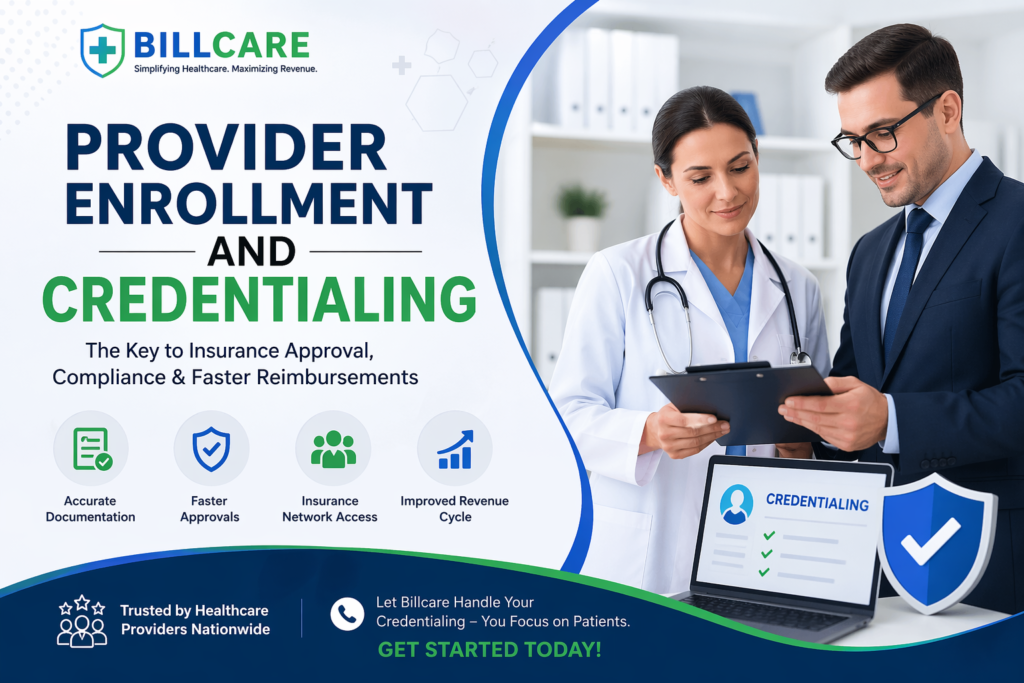
Billcare provides complete support for provider enrollment and credentialing, ensuring the process is smooth, accurate, and fast.
Our team handles everything from documentation to follow-ups with insurance companies.
We help healthcare providers:
- Reduce delays in approval
- Avoid application errors
- Speed up insurance enrollment
- Improve revenue cycle efficiency
- Stay compliant with healthcare regulations
Why Choose Billcare?
Healthcare providers often face delays due to missing documents, slow insurance responses, or complex verification steps.
Billcare solves these problems by offering:
- Dedicated credentialing experts
- End-to-end enrollment management
- Accurate and error-free documentation handling
- Faster communication with insurance networks
- Reduced claim rejection risk
With Billcare, providers can focus more on patients and less on paperwork.
Common Challenges in Credentialing
Incomplete Documentation
Many applications are delayed due to missing or incorrect information.
Solution: Billcare ensures complete and verified documentation before submission.
Insurance Delays
Insurance companies often take time to process applications.
Solution: Our team actively follows up to reduce delays.
Application Rejections
Errors in forms or missing details can lead to rejection.
Solution: We ensure accuracy and compliance at every step.
The Future of Credentialing in Healthcare
Healthcare systems are rapidly moving toward digital transformation. Automation and data-driven systems are improving the speed and accuracy of credentialing processes.
Modern platforms like CAQH and government agencies like Centers for Medicare & Medicaid Services are already improving efficiency in provider verification and enrollment.
In the future, credentialing will become faster, more automated, and highly integrated with healthcare systems.
FAQs
What is provider enrollment and credentialing?
It is the process of verifying and registering healthcare providers with insurance companies to ensure they are qualified to offer medical billing services.
How long does credentialing take?
It usually takes between 30 to 120 days depending on the insurance provider and documentation accuracy.
Is credentialing necessary for all providers?
Yes, without credentialing, providers cannot receive insurance reimbursements.
How does Billcare help in credentialing?
Billcare manages the entire process including documentation, submission, follow-ups, and approvals.
Conclusion
Provider enrollment and credentialing is a critical part of the healthcare revenue system. It ensures providers are verified, compliant, and eligible for insurance reimbursements.
With Billcare, this complex process becomes simple, fast, and fully managed—allowing healthcare professionals to focus on what matters most: patient care.