Medical Credentialing Services for Doctors, Clinics, and Hospitals

Healthcare providers must complete a complex verification and enrollment process before they can work with insurance companies and receive reimbursements. Medical credentialing services help physicians, clinics, and hospitals manage this process efficiently while ensuring compliance with healthcare regulations.
Credentialing verifies a provider’s qualifications, licenses, education, certifications, and work history. Without proper credentialing, doctors cannot join insurance networks or legally bill insurers for patient care. Because the process involves multiple steps and strict documentation requirements, many healthcare organizations rely on professional credentialing support.
What Are Medical Credentialing Services?
Medical credentialing is the process of verifying a healthcare provider’s professional background and enrolling them with insurance networks. Credentialing specialists review and confirm important details such as:
-
Medical education and training
-
State medical licenses
-
Board certifications
-
Work history
-
Malpractice insurance coverage
-
Hospital privileges
Once the verification is complete, providers are submitted to insurance companies for approval. After approval, physicians can legally bill insurers for medical services.
Many healthcare practices outsource medical credentialing services to professionals who understand payer requirements and documentation procedures. This helps reduce delays and ensures providers can start seeing insured patients sooner.
Why Credentialing Is Important for Healthcare Providers
Credentialing is not just a regulatory requirement—it directly affects the financial health of medical practices.
Key reasons credentialing is essential include:
Insurance Network Participation
Doctors must complete credentialing before they can join insurance networks. Without it, patients with insurance cannot be billed through that provider.
Compliance With Healthcare Regulations
Regulatory bodies require healthcare organizations to verify provider qualifications. Credentialing ensures compliance with these standards.
Faster Insurance Reimbursements
Proper credentialing ensures claims are accepted by insurance companies without unnecessary delays or denials.
Increased Patient Trust
Patients are more confident when providers are verified and approved by recognized insurance networks.
Because of these factors, many organizations rely on healthcare credentialing companies to manage the process.
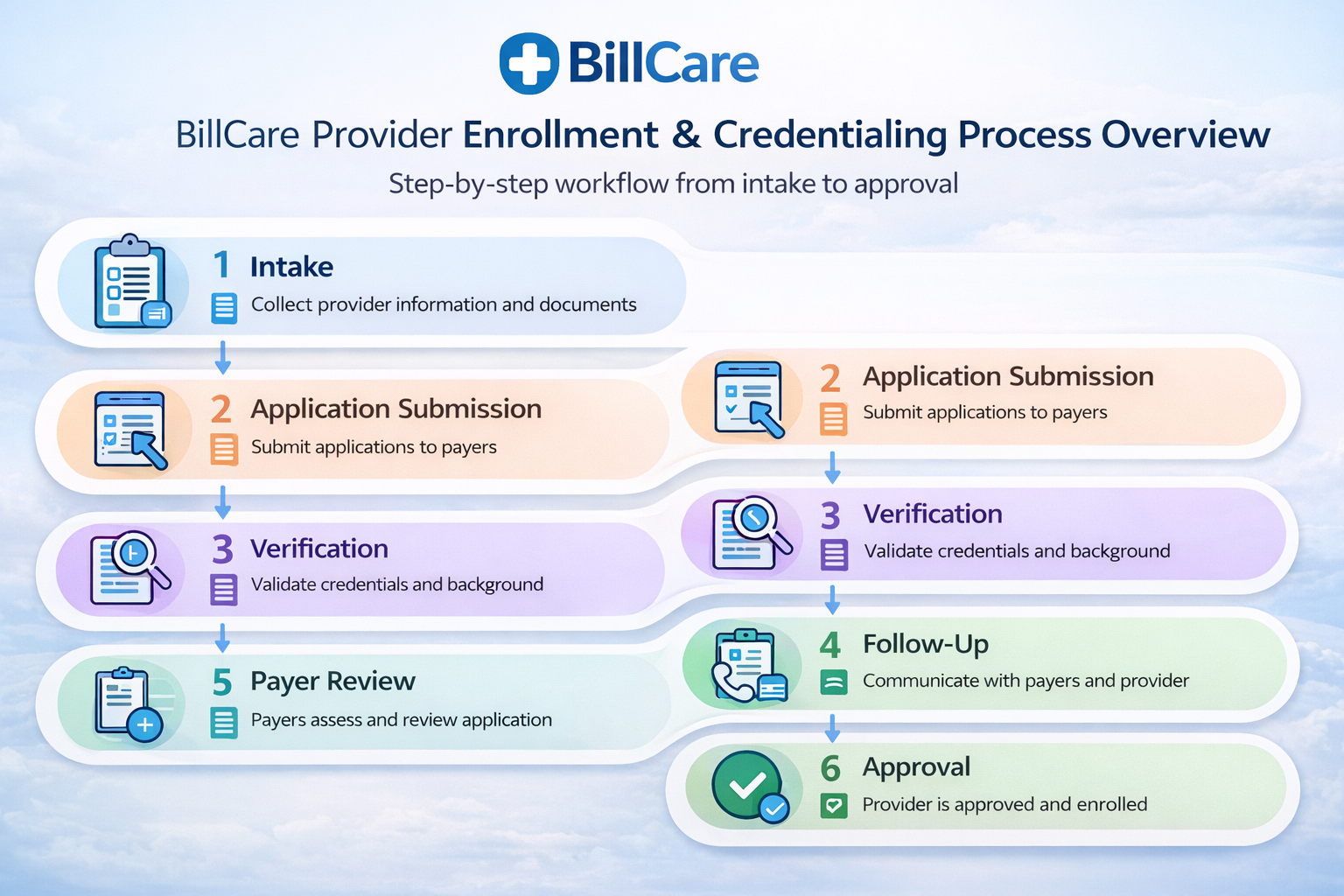
The Complete Medical Credentialing Process
Credentialing involves several detailed steps that require careful documentation and follow-up.
1. Provider Information Collection
Credentialing begins by gathering the provider’s personal and professional details, including licenses, certifications, and employment history.
2. Primary Source Verification
Credentialing specialists verify information directly with issuing organizations such as medical boards, universities, and certification bodies.
3. Insurance Network Enrollment
Once verification is complete, applications are submitted to insurance companies for approval.
4. Payer Review and Approval
Insurance companies review the submitted documentation and evaluate the provider’s qualifications.
5. Final Network Participation
After approval, the provider becomes an in-network physician and can begin billing insurance companies.
This entire process can take 60–120 days depending on the payer requirements and documentation accuracy.
Medical Billing and Credentialing Services: Why They Work Together
Credentialing and billing are closely connected in the healthcare revenue cycle.
Medical billing and credentialing services help ensure providers are properly enrolled with insurance networks before claims are submitted. Without credentialing, insurance companies may reject claims, causing revenue loss.
Combining billing and credentialing services offers several benefits:
-
Fewer claim denials
-
Faster reimbursement cycles
-
Better revenue management
-
Improved operational efficiency
For many clinics and hospitals, outsourcing both services simplifies administrative workloads.
How Physician Credentialing Services Help Doctors
Individual doctors often struggle to manage credentialing paperwork while also running busy medical practices. Physician credentialing services help doctors focus on patient care while experts manage the enrollment process.
Services typically include:
-
Insurance provider enrollment
-
CAQH profile management
-
License and certification verification
-
Application submissions to insurance companies
-
Follow-ups with payers
This ensures physicians remain compliant with regulatory standards and continue receiving reimbursements without interruptions.
Credentialing Solutions for Hospitals and Healthcare Organizations
Large healthcare systems manage dozens or even hundreds of providers. Tracking licenses, certifications, and payer enrollments for every physician can quickly become overwhelming.
Professional hospital credentialing companies help healthcare organizations manage these responsibilities efficiently.
Common services include:
-
Provider credentialing and re-credentialing
-
Insurance enrollment for multiple providers
-
Compliance monitoring
-
Provider database management
-
Documentation tracking
These solutions allow hospitals and medical groups to maintain regulatory compliance while reducing administrative workload.
Choosing the Best Credentialing Services for Your Practice
Selecting the right credentialing partner can significantly impact the efficiency of your healthcare operations.
When evaluating best credentialing services, consider the following factors:
Industry Experience
Choose providers with strong experience in healthcare credentialing and insurance enrollment.
Knowledge of Insurance Payers
Experienced credentialing specialists understand payer-specific requirements and submission processes.
Technology and Tracking Systems
Modern credentialing services use tracking systems to monitor application status and prevent delays.
Compliance Expertise
Credentialing professionals must stay updated with healthcare regulations and payer policies.
Working with reliable best insurance credentialing services ensures providers remain compliant and avoid costly credentialing mistakes.
Benefits of Outsourcing Medical Credentialing
Outsourcing credentialing provides several advantages for healthcare providers and organizations.
Reduced Administrative Work
Credentialing specialists manage paperwork, documentation, and follow-ups.
Faster Insurance Enrollment
Experienced professionals understand payer requirements and reduce delays.
Improved Revenue Cycle
Credentialed providers can start billing insurers faster.
Better Compliance Management
Experts ensure all provider information remains updated and verified.
Because of these advantages, many practices rely on professional medical credentialing companies to handle the process.
Final Thoughts
Credentialing plays a vital role in the healthcare industry. Without proper verification and insurance enrollment, healthcare providers cannot legally bill insurers or participate in payer networks.
Professional medical credentialing services help physicians, clinics, hospitals, and healthcare organizations manage this complex process efficiently. By ensuring accurate documentation, timely submissions, and proper payer communication, credentialing experts help healthcare providers focus on delivering quality patient care while maintaining financial stability.
Healthcare providers often face delays in insurance approvals and provider enrollment. Professional medical billing ensure doctors and clinics are properly registered with insurance networks. At BillCare, we provide complete credentialing enrollment, and medical billing services to help healthcare practices grow faster.