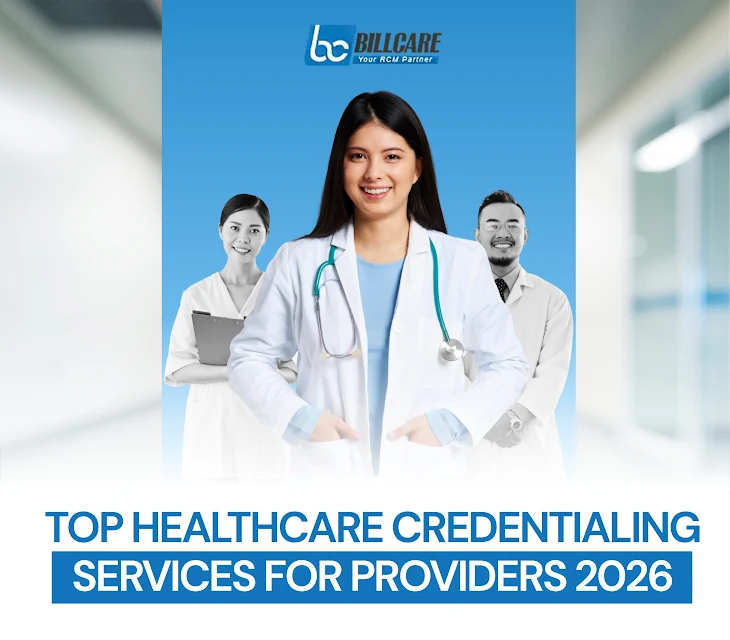
Top Healthcare Credentialing Services for Providers 2026
Healthcare providers today face growing administrative challenges alongside their clinical responsibilities. One of the most critical aspects of running a successful practice is ensuring proper healthcare credentialing services. Credentialing is not just a compliance requirement it’s the key to getting reimbursed on time, building trust with patients, and streamlining operations.
In this guide, we explore the best credentialing services discuss credentialing solutions for therapists, and compare medical billing and credentialing practices. We’ll also share insights on medical billing vs revenue cycle management and outline best practices for medical billing efficiency in healthcare.
What Are Healthcare Credentialing Services?
Billcare Healthcare credentialing services are processes that verify the qualifications, licenses, and professional background of healthcare providers. Hospitals, clinics, and insurance companies require this verification before allowing practitioners to provide care or receive reimbursement.
Credentialing ensures:
-
Compliance with federal and state regulations
-
Accurate provider information for insurance panels
-
Increased trust and credibility with patients
-
Efficient claim processing and fewer denied claims
Without proper credentialing, healthcare providers risk delayed payments, rejected claims, and even legal complications.
Why Credentialing Solutions for Therapists Are Essential
Therapists, including physical, occupational, and mental health professionals, often face unique credentialing challenges. Many insurers have strict documentation requirements that can be difficult to manage manually.
Credentialing solutions for therapists help by:
-
Streamlining application submissions to multiple insurance panels
-
Automating license verification and expiration tracking
-
Reducing administrative burden so therapists can focus on patient care
-
Ensuring faster insurance approval and claim processing
These solutions act as a safety net, preventing errors that could delay reimbursement or reduce patient trust.
Understanding Medical Credentialing Services
Many healthcare providers mistakenly treat Medical Credentialing Services as separate, unrelated tasks. In reality, they are tightly connected. Proper credentialing ensures that providers are recognized by insurers, which directly impacts billing accuracy and efficiency.
Key points to understand:
-
Credentialing ensures provider eligibility: Without proper credentialing, claims submitted for services may be denied.
-
Billing accuracy depends on credentialing: Accurate provider credentials prevent claim rejections and delays.
-
Integrated credentialing and billing systems: These systems allow real-time updates of provider status, reducing errors and improving revenue flow.
Providers who integrate their credentialing and billing processes see fewer denied claims, faster reimbursements, and overall operational efficiency.
Medical Billing vs Revenue Cycle Management
Many healthcare professionals confuse medical billing vs revenue cycle management (RCM). While related, they are distinct functions:
-
Medical billing focuses on submitting claims and following up on payments.
-
Revenue cycle management covers the entire financial process, from patient registration and eligibility verification to billing, payment posting, and denial management.
Understanding the difference is crucial because effective RCM includes credentialing as a foundational step, ensuring that claims are processed smoothly from start to finish.
Best Practices for Medical Billing Efficiency in Healthcare
Optimizing billing efficiency is essential for maintaining financial health in healthcare practices. Here are some best practices for medical billing efficiency in healthcare:
-
Verify credentials before submitting claims: Ensure providers are properly credentialed to prevent denials.
-
Use automated billing solutions: Automation reduces human error and speeds up claim submissions.
-
Regularly audit billing processes: Identify and fix recurring errors in claims or documentation.
-
Train staff on coding standards: Proper CPT, ICD, and HCPCS coding prevents costly mistakes.
-
Maintain updated insurance contracts: Keep all agreements current to avoid coverage gaps.
-
Integrate credentialing and billing systems: This creates a seamless workflow, reducing delays and enhancing reimbursement.
By implementing these practices, healthcare providers can improve cash flow, reduce administrative burden, and focus more on patient care.
Choosing the Right Healthcare Credentialing Services
Selecting the right healthcare credentialing services is critical for providers aiming to streamline operations and maintain compliance. Consider these factors:
-
Experience and reputation: Look for credentialing agencies with proven success in your specialty.
-
Technology integration: Services that sync with your EHR, billing software, and insurance portals reduce errors.
-
Custom solutions for your practice type: Therapists, primary care providers, and specialists have unique needs.
-
Compliance support: Ensure the service stays updated with federal and state credentialing requirements.
Investing in the right credentialing partner can save time, reduce errors, and improve financial outcomes.
Conclusion
Effective healthcare credentialing companies are more than a regulatory requirement they are a strategic tool for improving operational efficiency, ensuring compliance, and maximising reimbursement. For therapists and other healthcare providers, leveraging credentialing solutions for therapists alongside efficient medical billing and credentialing processes ensures a smoother workflow and faster claim approvals.
By understanding medical billing vs revenue cycle management and implementing best practices for medical billing efficiency in healthcare, practices can save time, reduce errors, and focus on what truly matters delivering exceptional patient care.
FAQs About Healthcare Credentialing Services
Q1: How long does healthcare credentialing take?
Credentialing can take 30–120 days depending on the provider type, insurance companies, and completeness of the application.
Q2: Can therapists manage credentialing themselves?
While possible, using dedicated credentialing solutions for therapists is highly recommended to avoid delays and claim denials.
Q3: What’s the difference between medical billing and credentialing?
Medical billing handles claim submission and payment collection, while credentialing ensures the provider is authorized to bill and deliver services to patients.
Q4: How do I improve billing efficiency in healthcare?
Use integrated billing and credentialing systems, automate claim submissions, audit regularly, and train staff on coding accuracy.
Q5: Are there services that combine credentialing and RCM?
Yes, several providers offer integrated solutions that manage credentialing, billing, and revenue cycle management in a single platform.